



On October 20, Qidu Pharma’s independently developed first drug-loaded lipid emulsion product, Piruitong®-Aprepitant Injection, was approved for marketing. Its drug approval number is GYZZ H20266347, with a specification of 18mL:130mg, packaged in glass ampoules. The product was filed as a Class 3 chemical drug and is deemed to have passed the consistency evaluation.
Chemotherapy-induced nausea and vomiting (CINV) is the most common adverse reaction during cancer treatment. Severe vomiting can cause dehydration, electrolyte imbalance, and eating disorders, and remains a major unmet clinical need in oncology treatment.
Aprepitant, a highly selective NK-1 receptor antagonist, blocks substance P-mediated vomiting signals and provides protection against both acute and delayed vomiting, addressing the shortcoming of conventional antiemetics in preventing delayed vomiting. It is a first-line core medication consistently recommended by authoritative domestic and international guidelines, including the NCCN (National Comprehensive Cancer Network) Clinical Practice Guidelines in Oncology: Antiemesis, the ASCO Guideline for Chemotherapy-Induced Nausea and Vomiting, and the Chinese Expert Consensus on the Prevention and Treatment of Nausea and Vomiting Associated with Antineoplastic Drug Therapy. In combination with other antiemetics, this product is indicated for adults to prevent: (1) acute and delayed nausea and vomiting during initial and repeat courses of highly emetogenic chemotherapy (HEC); and (2) delayed nausea and vomiting during initial and repeat courses of moderately emetogenic chemotherapy (MEC). Since its launch in China in 2022, sales of Aprepitant Injection have grown at an annual rate of more than 50%, and the domestic market reached RMB 301 million in 2025.
Aprepitant Injection offers three core advantages.
First, it addresses the clinical limitations of oral formulations. The product meets the clinical needs for patients with restricted oral administration and provides a more complete CINV treatment solution for patients overall. It also avoids the first-pass metabolism effect associated with oral administration, eliminating individual efficacy differences caused by gastrointestinal absorption. After administration, plasma concentration peaks rapidly, providing fast, stable, and controllable onset and ensuring antiemetic efficacy throughout chemotherapy.
Second, natural excipients make the drug-loaded formulation safer and more effective. Compared with fosaprepitant dimeglumine for injection, which shares the same mechanism, aprepitant Injection uses a drug-loading system built with widely used natural injection-grade excipients such as soybean oil and egg yolk lecithin, and contains no synthetic surfactants such as polysorbate 80, significantly reducing the risk of infusion-related allergic and hypersensitivity reactions at the source.
Third, it is convenient and efficient to use. As a drug-loaded lipid emulsion formulation, it is ready to use and requires no complex reconstitution, saving clinical operation time and improving bed turnover rate while effectively reducing pharmacy compounding errors.
As a complex injection with high technical difficulty, aprepitant-loaded lipid emulsion poses an industry challenge in formulation development and industrial production because the API has poor solubility in both aqueous and oil phases. Qidu Pharma initiated R&D in September 2023. Through extensive excipient screening experiments and multiple rounds of optimization of oil phase types, lecithin selection, and co-solvent ratios, the team sought the optimal balance between high drug-loading requirements and the physical stability of the emulsion, successfully solving key technical challenges such as poor API solubility, emulsion stratification, and demulsification. Relying on extensive DOE experiments and repeated validation, the team explored critical conditions, mastered the core high-pressure homogenization technology, and established a robust process design space, laying a solid foundation for product quality control and scale-up production.
The successful approval of Qidu Pharma’s Piruitong®-Aprepitant Injection enriches the company’s lipid emulsion product pipeline, marks the maturation of its high-end lipid emulsion formulation technology platform, and lays the foundation for the subsequent development of more emulsion products for poorly soluble drugs. It also further enhances the company’s core competitiveness in antitumor and adjuvant therapy, one of its six core therapeutic areas. At present, in the chemotherapy-induced vomiting segment, Piruitong®-Aprepitant Injection, together with marketed products such as Qiqiong®-Tropisetron Hydrochloride Solution for Injection, Paluotong®-Palonosetron Hydrochloride Injection, and Anweitong®-Metoclopramide Dihydrochloride Injection, covers three major mechanisms of action—5-HT3 receptor antagonists, NK-1 receptor antagonists, and dopamine receptor antagonists—providing a Qidu solution for ensuring the safety, accessibility, and choice of clinical medication for patients.
Recommended reading
-

 January 20, 2025
Top Ten Events of Qidu Pharmaceutical Group in 2025 Announced
-
 June 17, 2026
Qidu Pharma’s intelligent production project for oral preparations with an annual capacity of 10 billion tablets/granules passed the GMP on-site inspection.
-
 November 09, 2026
“International Qidu · English Leads the Future” Series of Internationalization-Themed Activities Officially Launched
-
 November 09, 2026
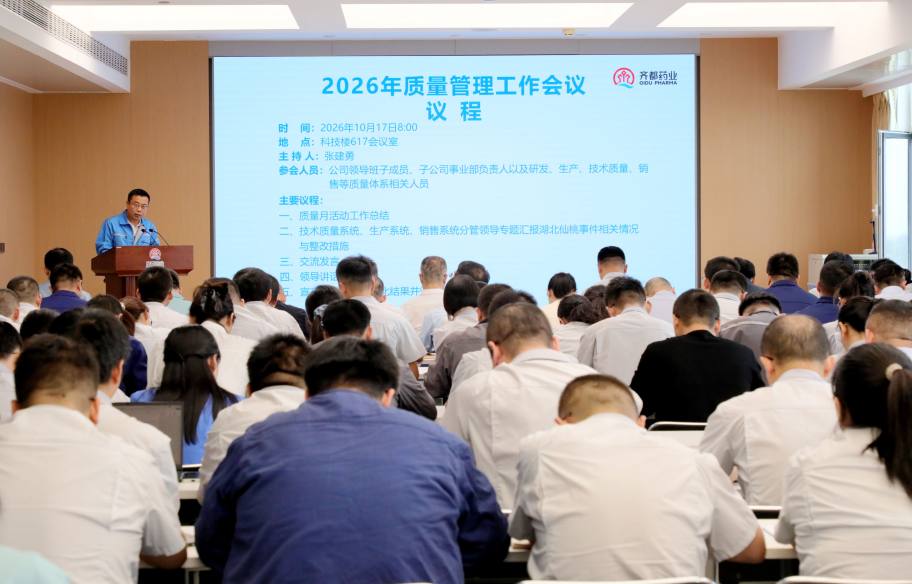
Qidu Pharma Quality Management Work Conference
-
 November 09, 2026
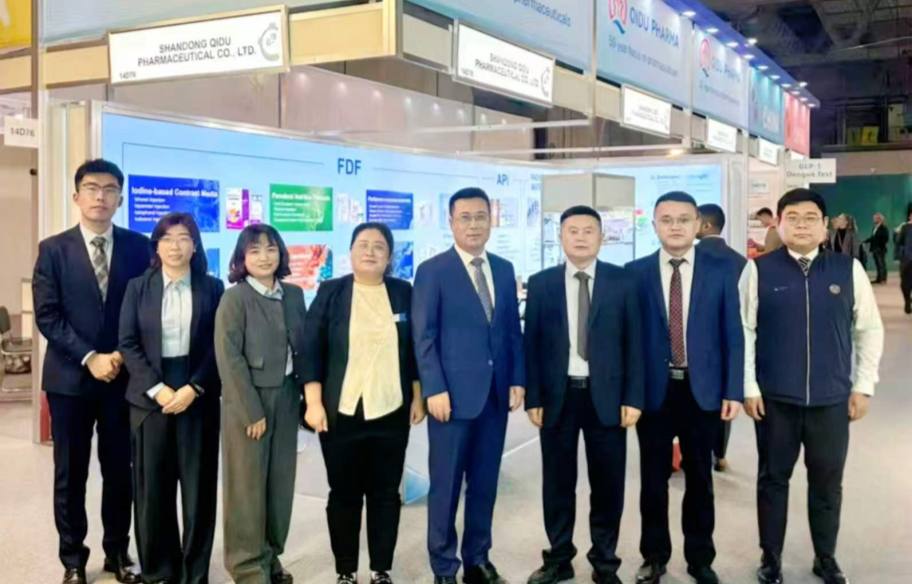
Qidu Pharmaceutical Group Makes a Strong Showing at Both CPHI Milan and PharmChina in Beijing
-
 October 13, 2026
Qidu Pharmaceutical Holds Postdoctoral Completion and Entry Ceremony and Project Report Meeting
-
 October 13, 2026
Qidu Metrology and Testing Center Passes CNAS Calibration Laboratory On-Site Assessment